There's a particular kind of silence that falls over a dancefloor when the music stops so a DJ can work out what someone is shouting at them. It's never the good kind. Nobody sets out to be that person, yet every Saturday night someone leans across the mixer mid-drop and asks for something the room is plainly not ready for.
The good news is that requesting a song well is not complicated. It takes about thirty seconds, a bit of reading the room, and the willingness to hear the word "no" without taking it personally. Do it properly and DJs will remember you fondly — sometimes for years.
Timing Does Most of the Work
Most requests go wrong before a single word is spoken. The track was fine; the moment was not.
The reliable window is between songs, when the DJ's hands are off the decks and they're looking up from the booth. That pause might only last a few seconds, so have your sentence ready before you move. If you can see both ears covered by headphones, one hand on the mixer and a frown of concentration, wait. If they're mid-blend, mid-build or leaning into a drop, definitely wait.
Earlier in the night is generally easier. A DJ at half nine has room to move — the floor isn't packed, the mood isn't set in stone, and there's space for a curveball. Peak time, usually somewhere between eleven and one, is when the set has momentum and every record is doing a job. The last fifteen minutes are for the closing run, and that's the DJ's, not yours.
One more thing: approach from the side of the booth rather than reaching over the mixer. It's a small courtesy that keeps you out of the way of the equipment and out of the eyeline of everyone watching.
Say Three Things and Step Back
A good request is short. Name the track, name the artist, and give the DJ an easy exit. Something like: "Hi — when you get a gap, could you play 'Move On Up' by Curtis Mayfield? No worries if it doesn't fit." That's the whole thing. You've been clear, you've been polite, and you've made it obvious that a refusal won't cause a scene.
What doesn't work is a description instead of a request. "Something with a bit more energy" or "you know, that one that goes dun-dun-dun" gives the DJ nothing to work with. If you can't name it, hum it quietly, accept the shrug, and move on.
Quick guide
- Do say the artist and title clearly, once.
- Do mention a reason only if it's short and real — "it's my mate's birthday" is enough.
- Do accept "maybe later" as a genuine answer, because it often is.
- Don't ask during a mix, a blend or a drop.
- Don't request three songs in one go and call it a shortlist.
- Don't hand over your unlocked phone and expect them to scroll.
- Don't linger at the booth afterwards to monitor progress.
Read the Booth Before You Move
DJs give off more signals than they realise. Headphones on both ears, hunched shoulders, flicking through a wallet of USB sticks, deep in conversation with bar staff — all of that means not now. Standing up, sipping a drink, looking out across the floor: that's an open door.
Read the room as well. If the floor is heaving to a run of garage and you want to hear a slow ballad, you already know the answer. A request that fits what's playing right now is far more likely to land, and it tells the DJ you've actually been listening rather than waiting for your turn.
When Not to Ask at All
There are nights when the request is beside the point, and pushing it just wastes everyone's time.
- A genre-locked or themed night — a tribute set, a drum & bass night, a soul all-dayer. Bringing a different style into the booth rarely ends well.
- A private party with a brief from the hosts. The couple chose the music for a reason.
- The last fifteen minutes, when the closing run is already planned.
- When three other people are already queuing at the booth.
- When you've asked twice already. Twice is the limit.
- When the venue has its own system — a QR code, a request card, a form on the website. Use it. That's what it's for.
Take a No Well — It's Worth More Than You Think
A gracious "no worries, thanks anyway" costs you nothing and often pays off. DJs remember faces, and they remember who made their night harder. Plenty of tracks that get politely declined at eleven find their way into the set at one, when the floor thins out and there's space for something unexpected.
Remember too that a refusal is usually about the room, not about you. Your song might be a stone-cold classic that simply doesn't belong in the next twenty minutes. Arguing the case, hovering by the booth, or asking again after a decent interval is how a small disappointment turns into a story the staff tell for months.
When It Really Matters: Birthdays and Dedications
If a song is genuinely important — a birthday, a first dance anniversary, a dedication for someone who's travelled to be there — say so early. Catch the DJ before the floor fills, or message the venue or the DJ's page in advance if they invite it. Give them a rough window and let them choose the exact moment. A DJ who knows a dedication is coming will find a far better slot for it than one who's ambushed at half twelve.
Ask once, accept the answer, and don't expect guarantees. Sets move around, and the moment that works at ten might not work at midnight.
A Short Checklist Before You Walk to the Booth
- Are the DJ's hands off the decks and are they looking up?
- Can you say the artist and the title in one clear sentence?
- Does it fit what's playing right now?
- Are you genuinely fine with "not tonight"?
If you can answer yes to all four, go and ask. Be brief, be kind, and thank them whether or not it lands. Then get back on the floor — the dancing is the point, and the best way to earn a request is to be part of the crowd the DJ is already enjoying playing to.
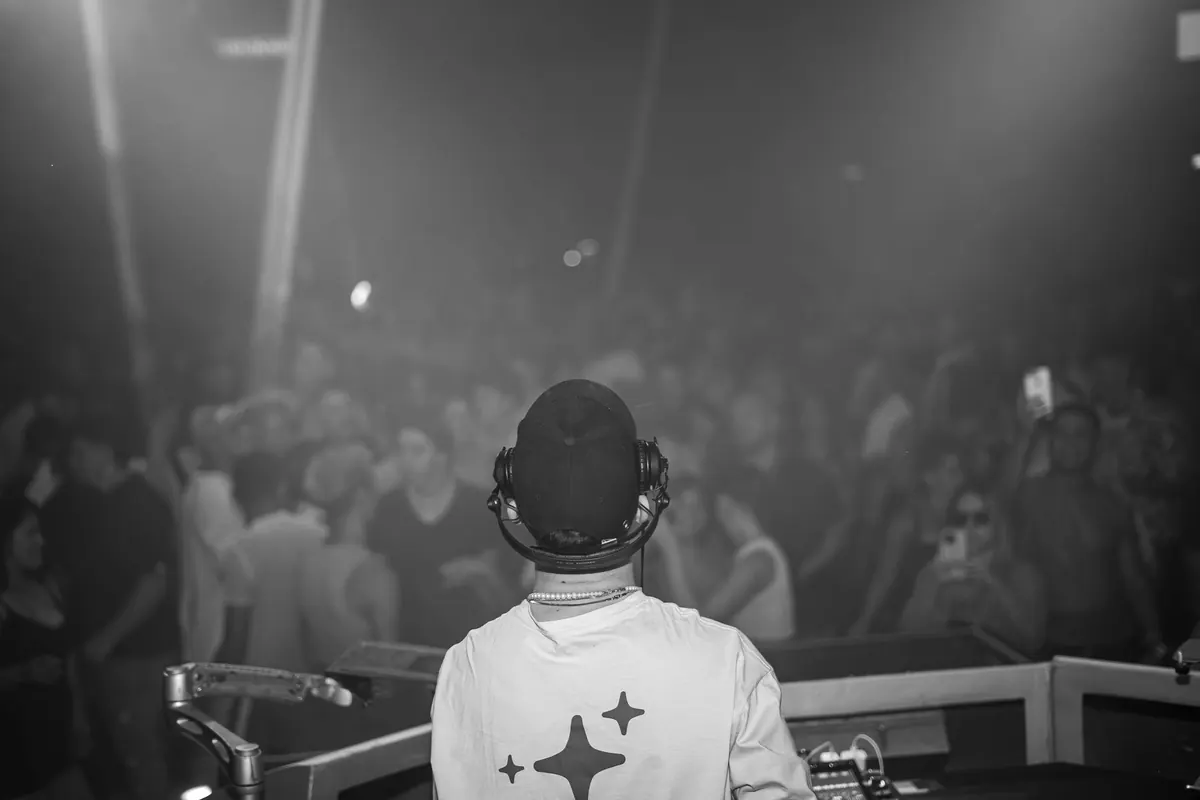
Photo: Nano Erdozain / Pexels