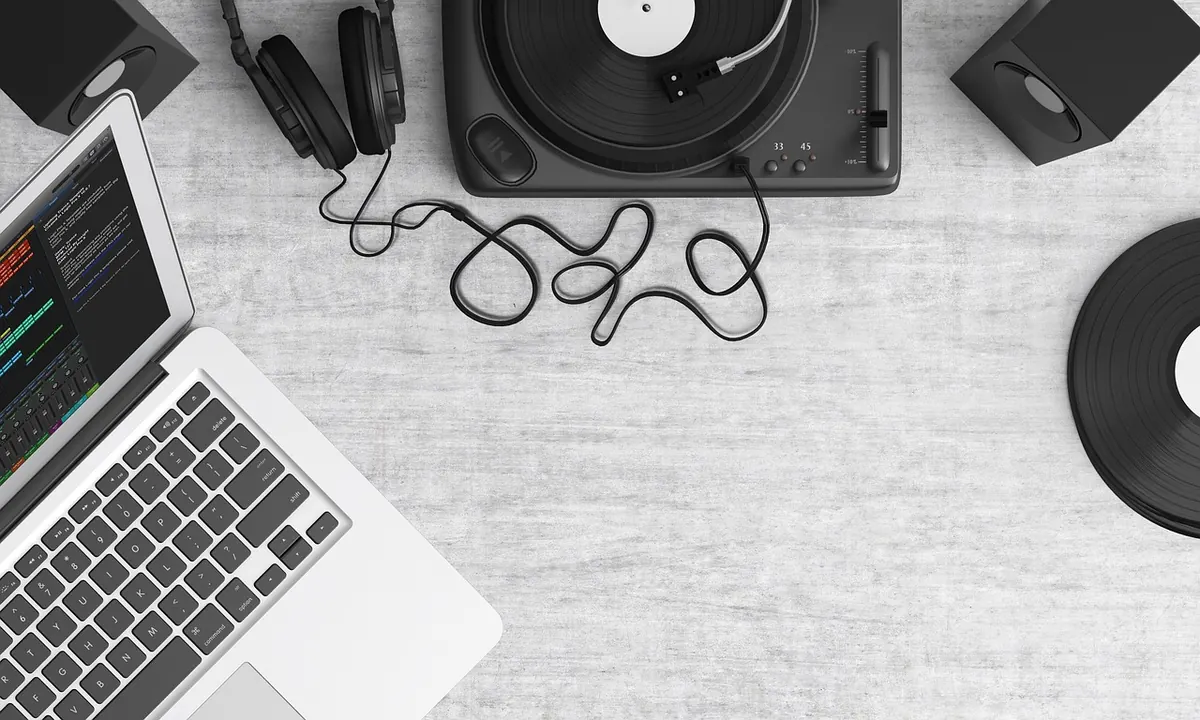
There is a moment in a good room, usually just after midnight, when the crowd stops watching the door and starts watching the booth. What they see up there — two hands on a laptop, or two hands on a record — changes how the night feels, even when the track coming out of the speakers is exactly the same one.
Sound comes first, because that is what the room remembers
A vinyl set runs through a chain of physical parts: stylus, cartridge, tonearm, platter, phono stage. Every link adds something. Some pressings are cut loud and thin, others carry real weight in the low end. A well-pressed 12-inch played on a properly set-up turntable often has a midrange presence that feels solid and immediate, and a top end that is slightly rolled off rather than sharp. That softness is part of why people describe vinyl as warm. It is not magic; it is engineering.
Digital is different in kind, not just in degree. A lossless file feeding a good converter gives the engineer more headroom, a deeper and more controlled sub, and none of the surface noise. On a club rig with a serious subwoofer, a clean digital file will usually hit lower and harder than the same track on vinyl, because vinyl mastering has to compromise: heavy bass takes up groove space, and excessive stereo information in the low end can throw the needle out altogether.
None of this means one format wins. A badly compressed MP3 through a cheap controller sounds thin and tiring. A great pressing through a great system sounds enormous. What you notice most is care, not format.
What you see, and how it shifts the floor
Vinyl is visible work. You can watch a DJ pull a sleeve from a bag, read the label, drop the needle in the right place, and hold a mix together with a pitch fader and a light touch on the platter. There is no screen between the DJ and the room, which tends to mean more eye contact and more reading of the crowd.
Digital sets can look like the opposite: a glow, a downward stare, a person scrolling. It does not have to be that way. A DJ with a well-mapped controller and the confidence to leave the browser alone can be far more present than someone hunched over a crate. The format does not decide this. The person does.
For you, standing on the floor, the visual difference matters more than you might think. A vinyl set feels like a performance you can follow. A digital set feels like a soundtrack being shaped in real time, often with more going on than you can see.
Mixing, transitions and the odd mistake
On vinyl, beatmatching is done by ear. Tempos drift, pitches need nudging, and the crowd sometimes bounces the floor enough to make a needle skip. When something goes wrong, you hear it — and you also hear how quickly the DJ recovers, which is often the most exciting part of the night.
Digitally, loops, hot cues and key-locked tempo changes make long, seamless blends easy. Three or four tracks can be layered without anyone noticing the joins. The risk is the opposite of a mistake: a set so smooth it stops feeling like anything is happening.
Things worth listening for in either case:
- How long a blend lasts — two bars or two minutes says a lot about the DJ's style.
- Where the bass sits when tracks overlap. Muddy low ends are a mixing choice, not a format problem.
- Whether the tempo drifts. A slow creep is human; a sudden jump usually is not.
- Surface noise. Crackle between tracks is not a fault, it is simply the medium.
The practical side: changeovers, requests and the booth
Swapping between two vinyl DJs takes a few minutes, and a good pair will keep music playing while they do it. Two digital DJs can change over in seconds. If you are timing your night around a particular set, arrive early rather than assuming the previous DJ will stop exactly on the hour.
Requests behave differently too. A digital DJ can often find a track quickly; a vinyl-only DJ either has it in the bag or does not, and no amount of asking will change that. Do not take the refusal personally. Also worth knowing: turntables are sensitive to vibration, so leaning on the booth, resting drinks on the plinth or thumping the stage can genuinely disrupt a set.
Hybrid sets are now the norm
Plenty of DJs run both. Timecode vinyl lets a record control a digital file; a USB stick sits next to a bag of 12-inches. This is not cheating and it is not a compromise — it is just a wider palette, and it usually means the DJ can follow the room wherever it goes.
What to expect at Pulse Room
Our listings tell you which format each night is built around, and it is worth checking before you come out. Vinyl-only nights tend to be more curated: narrower in genre, deeper in the crates, often soul, disco, house or reggae, and rarely built around the newest releases. Digital-led nights roam further and faster, and can turn on a request or a moment in the crowd.
Whichever you land on, a few things make the night better. Come early enough to hear a DJ settle in. Stand where you can see the booth if you want to watch the craft. Ask for a track once, politely, and accept the answer. Bring earplugs — a good system is loud, and you will enjoy the last hour far more if you can still hear it.
And if you find yourself watching two hands on a record at one o'clock in the morning, stay a while. That particular kind of attention is worth the ticket on its own.
Photo: theglassdesk / Pixabay